
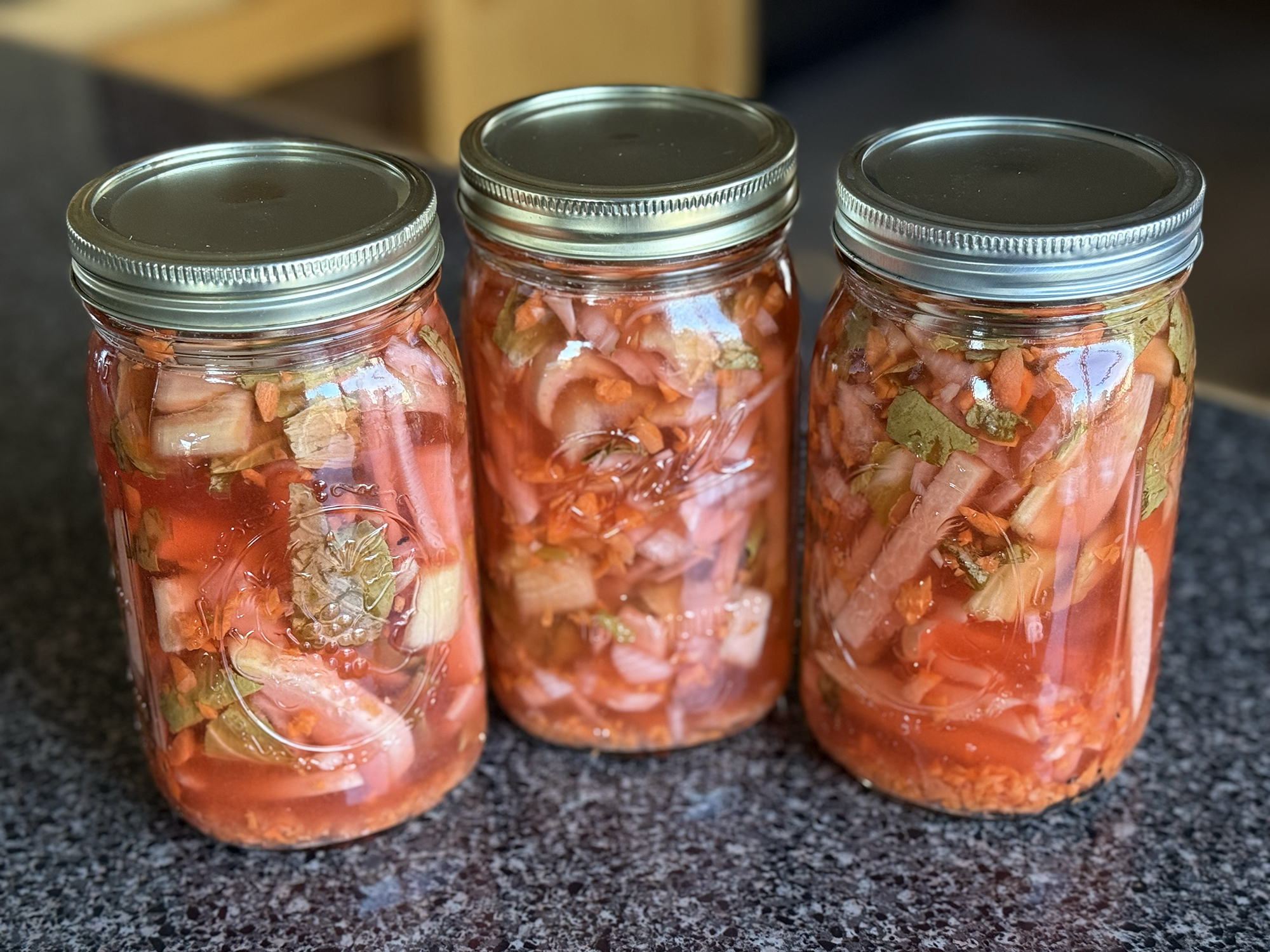
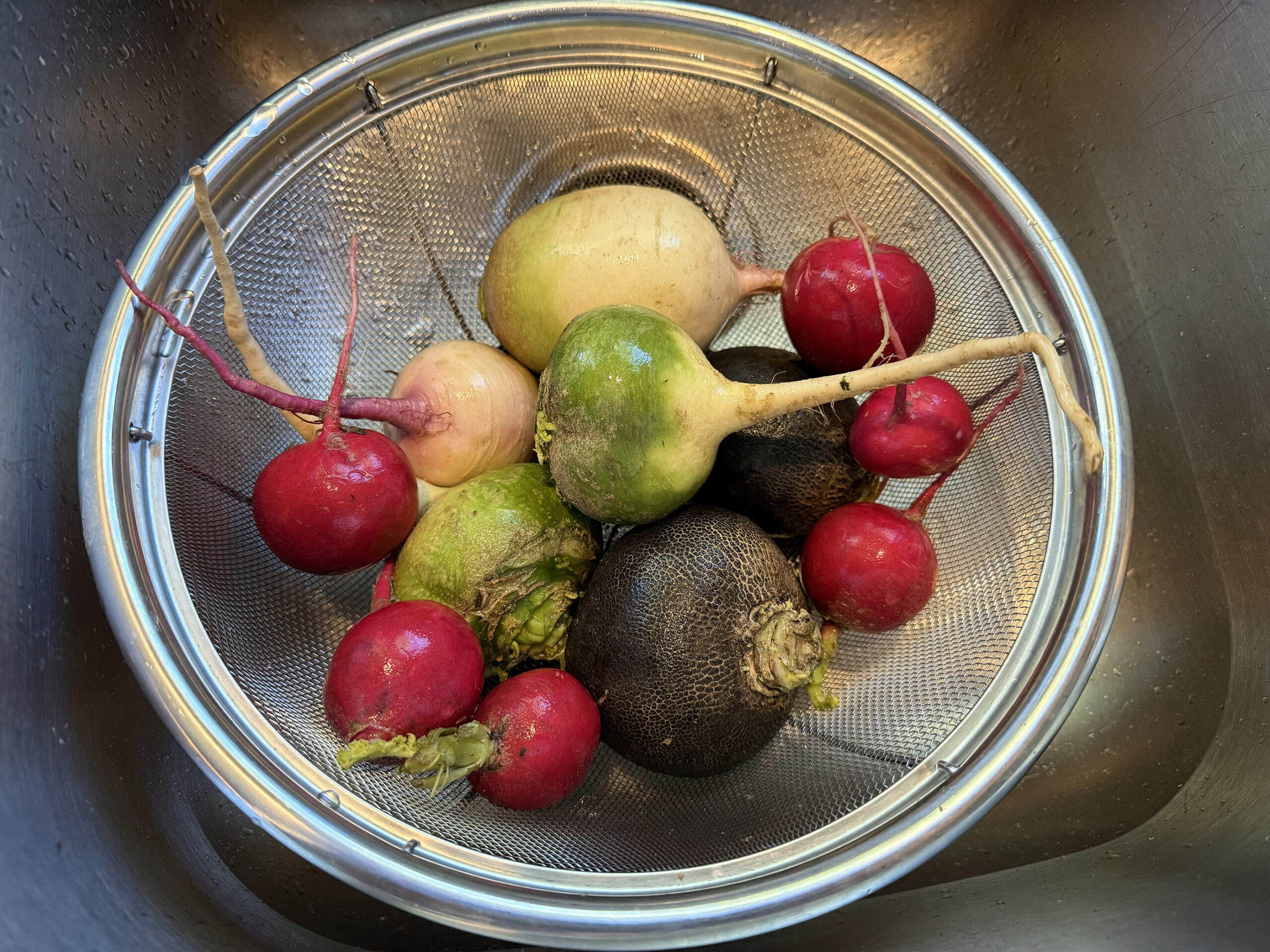
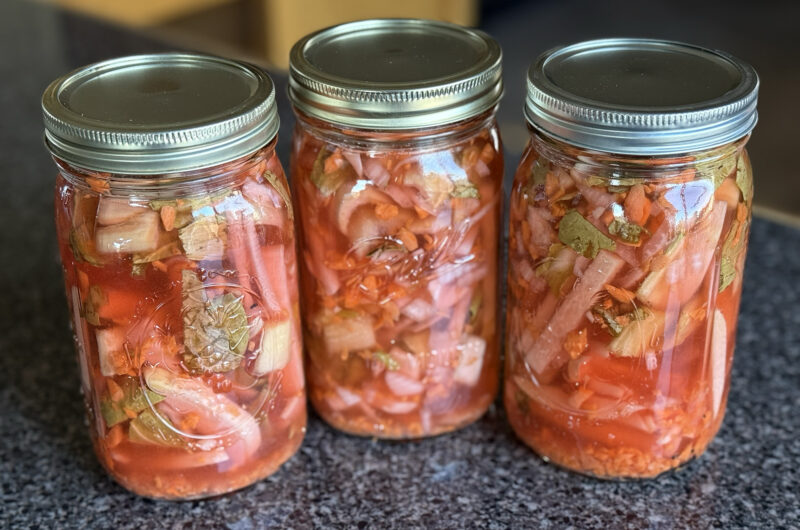
Homemade sealed kimchi lasts 3 to 6 months for optimal peak flavor and crunch, although it remains safe to eat for up to 12 months or longer if remains sealed and refrigerated. Once opened and continue to be stored in the refrigerator, it is perfectly fine to eat for another 3 to 6 months. For this batch, I purchased the most amazing radishes from our local cooperative!
Other possible additions
- Cabbage
- Green onions
- A splash of sesame oil
Why eat Kimchi?
Kimchi is packed with probiotics, vitamins, and active plant compounds that significantly improve digestive health, immune function, and inflammation levels.
Key Health Benefits
- Improves Gut Health: Loaded with millions of Lactobacillus bacteria from fermentation. These strengthen your microbiome and aid digestion.
- Boosts Immune System: Contains high levels of Vitamin C and antioxidants. These help fight cell damage and prevent common illnesses.
- Reduces Inflammation: Active components like capsaicin (from chili peppers) and garlic compounds lower inflammatory markers in the body.
- Aids Weight Management: Very low in calories but highly rich in dietary fiber. This promotes fullness and regulates metabolic health.
- Supports Heart Health: Regular consumption helps lower total cholesterol levels and reduces blood pressure.
- Enhances Skin Health: High concentrations of Vitamin A and antioxidants help clear skin and fight premature aging.
Best Practices for Gut Health
- Eat It Raw: Heat kills the live, beneficial Lactobacillus probiotics. Eat your daily portion straight from the fridge as a side dish or condiment.
- Start Small: If your digestive system is not used to fermented foods, start with 1 tablespoon daily to prevent temporary bloating or gas.
- Vary Your Timing: Eat it alongside a fiber-rich meal. The prebiotics in veggies feed the probiotics in the kimchi.
- Mix Into Cold Dishes: Toss it into cold noodle salads, layer it onto sandwiches after cooking, or use it as a topping for grain bowls.
- Drink the Brine: The leftover juice in the jar contains the highest concentration of live lactic acid bacteria. Add a spoonful to dressings or rice.
Best Practices to Maximize Lifespan
- Submerge Everything: Press the kimchi down with a clean utensil after every use so the brine covers the vegetables.
- Use Clean Utensils: Never eat directly from the container or use dirty forks, as this introduces harmful bacteria.
- Seal Tightly: Wipe the rim of the jar clean and close the lid tightly immediately after opening.
- Keep It Cold: Store it in the main body of the fridge or the vegetable crisper, not in the warmer door shelves.
Kimchi Basics
3
quarts1
hour7 to 10
DaysIngredients
3 to 4 heads Baby Bok Choy – chopped into large chunks/spears
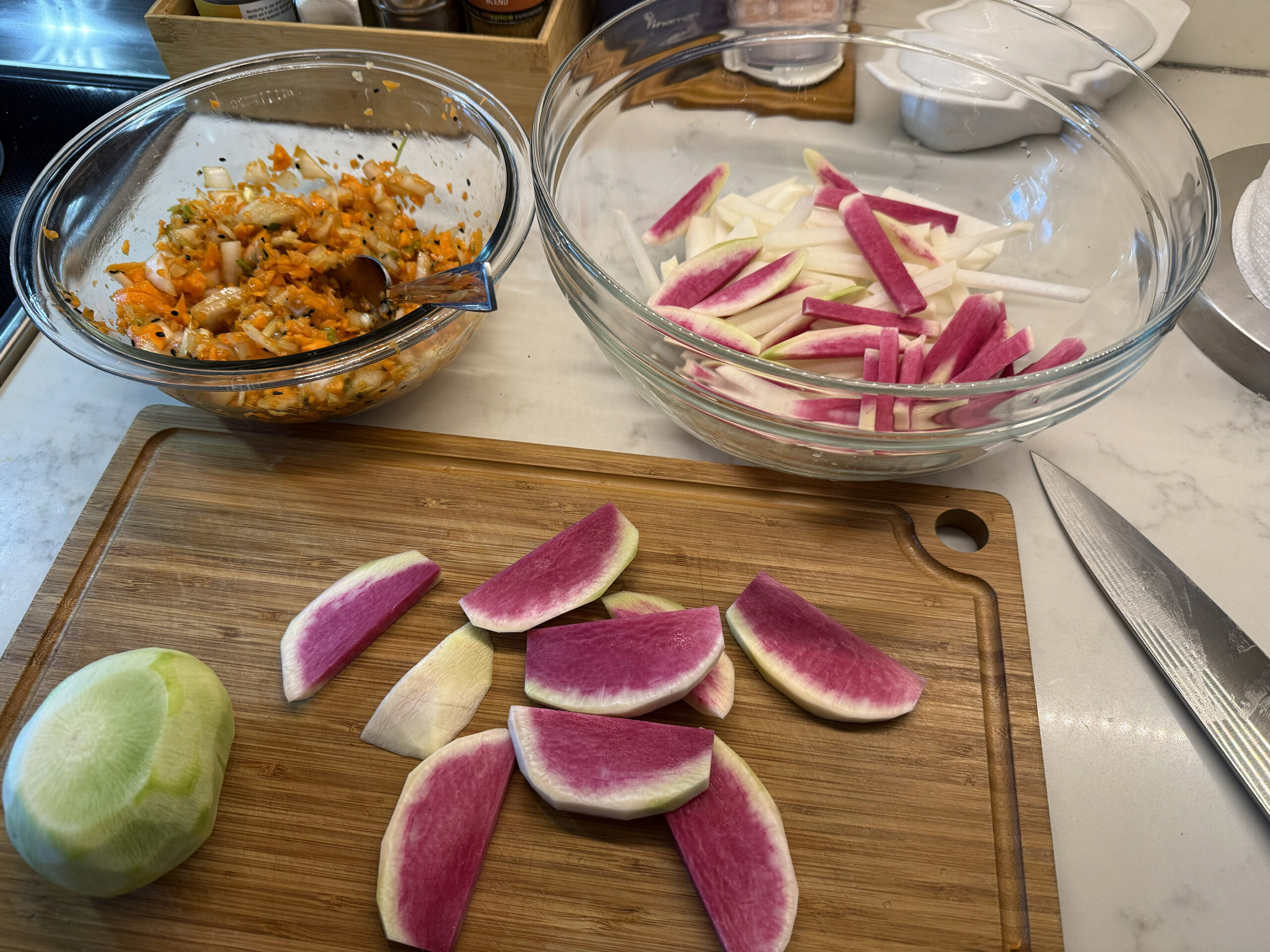
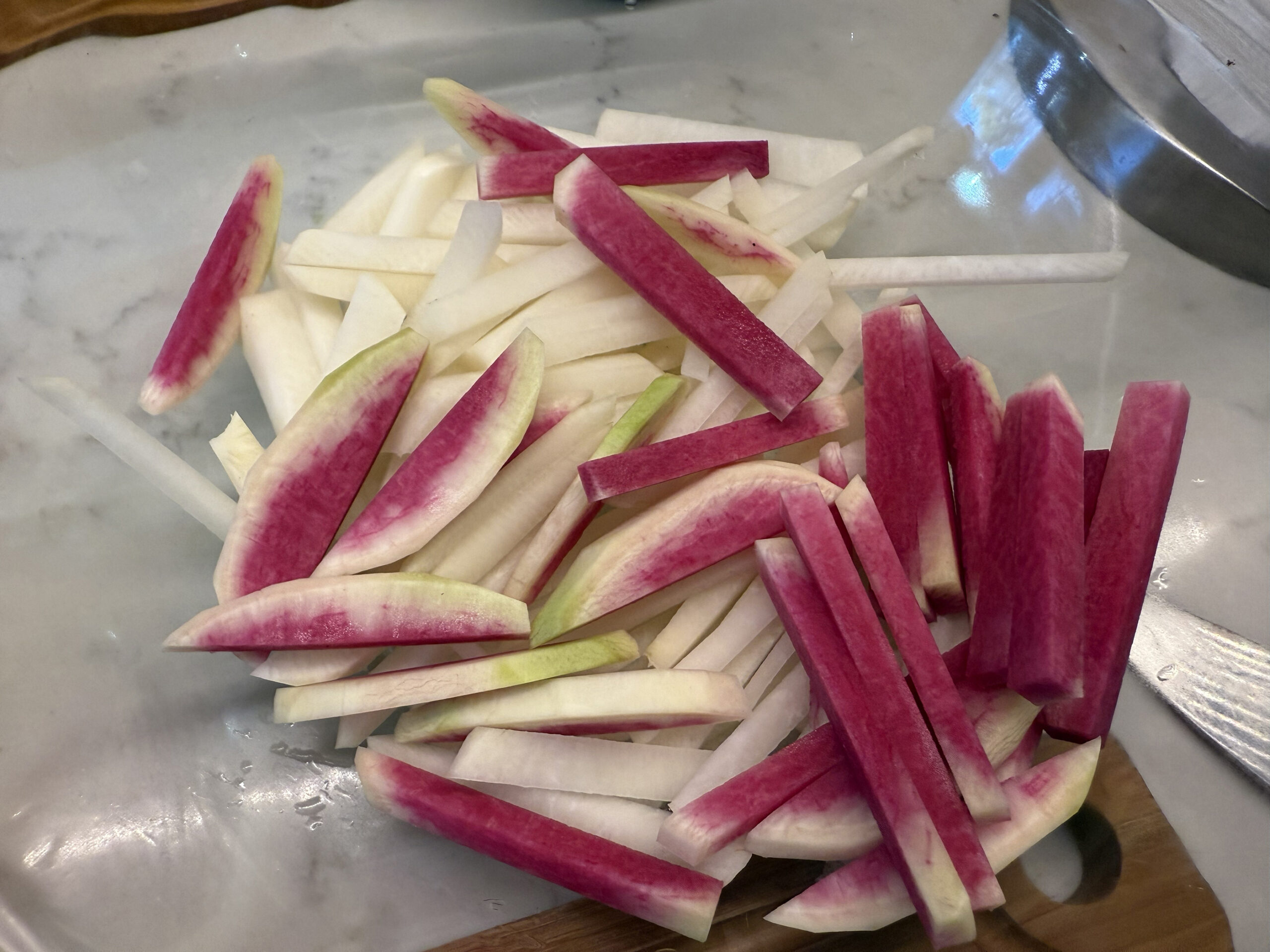
3 Large radishes – or 8 small radishes – cut into small strips
4 Carrots
1 medium White onion
5 teaspoons Minced garlic
2 tablespoons Fresh peeled ginger
1 teaspoon Soy sauce
Pepper flakes – to taste
2 tablespoons Lola’s hot sauce – or something similar
2 teaspoons Black sesame seeds
4 tablespoons Kosher sea salt
2 quarts Purified water
Directions
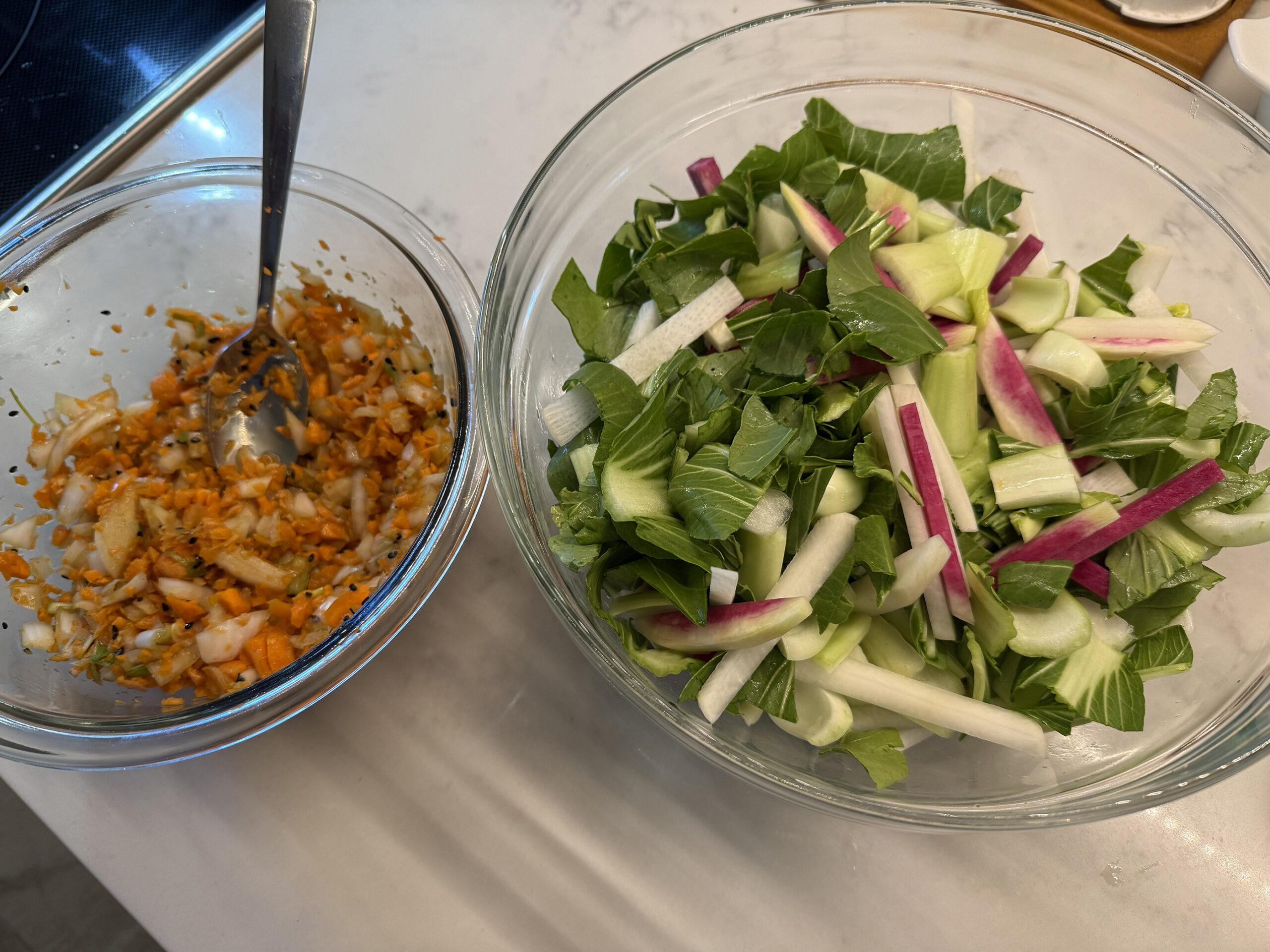
- Chop up bok choy and radishes – put in a large bowl and set aside
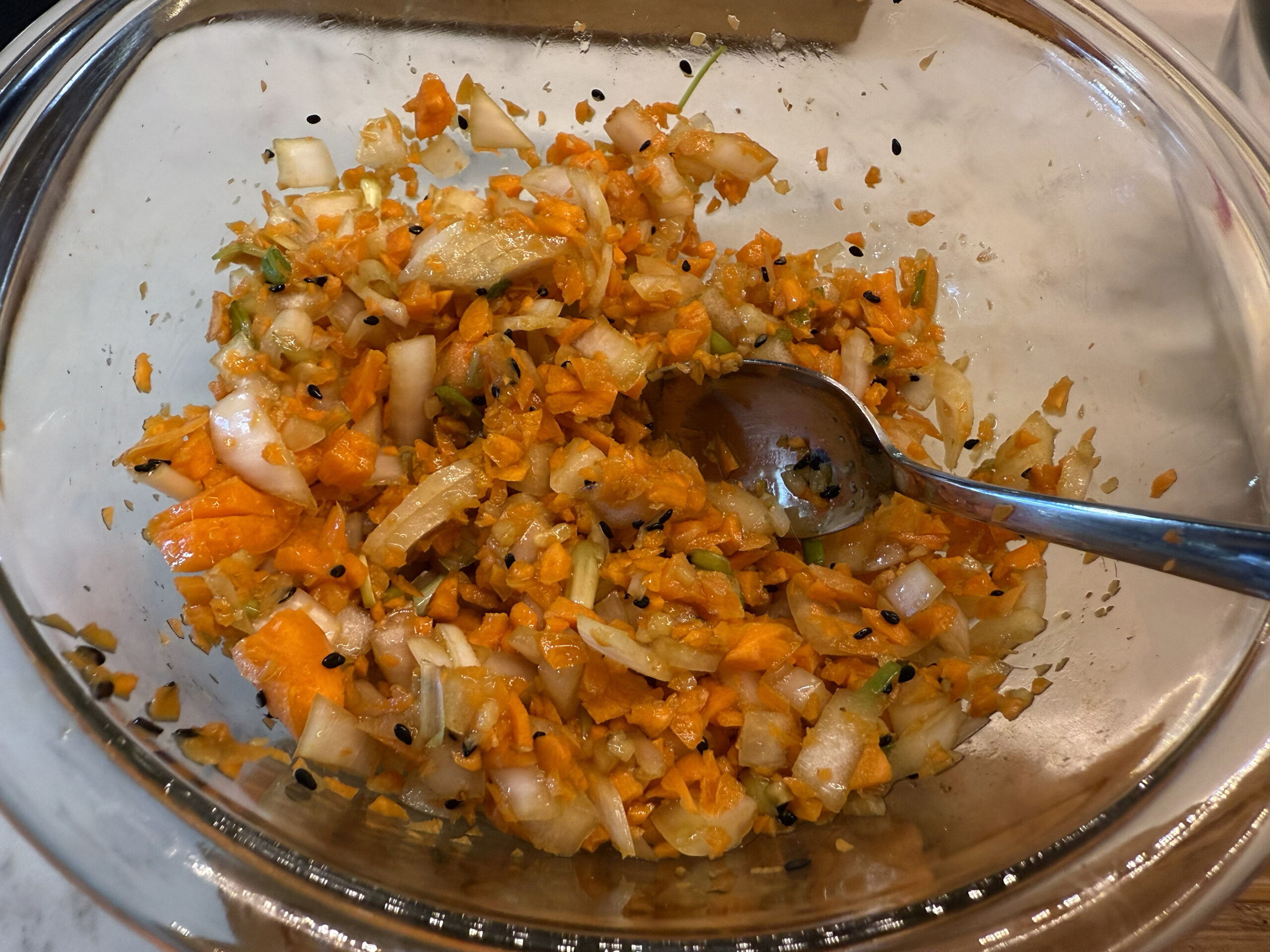
- Run onions, carrots, garlic & ginger through a food processor, briefly chopping into small chunks but not smooth
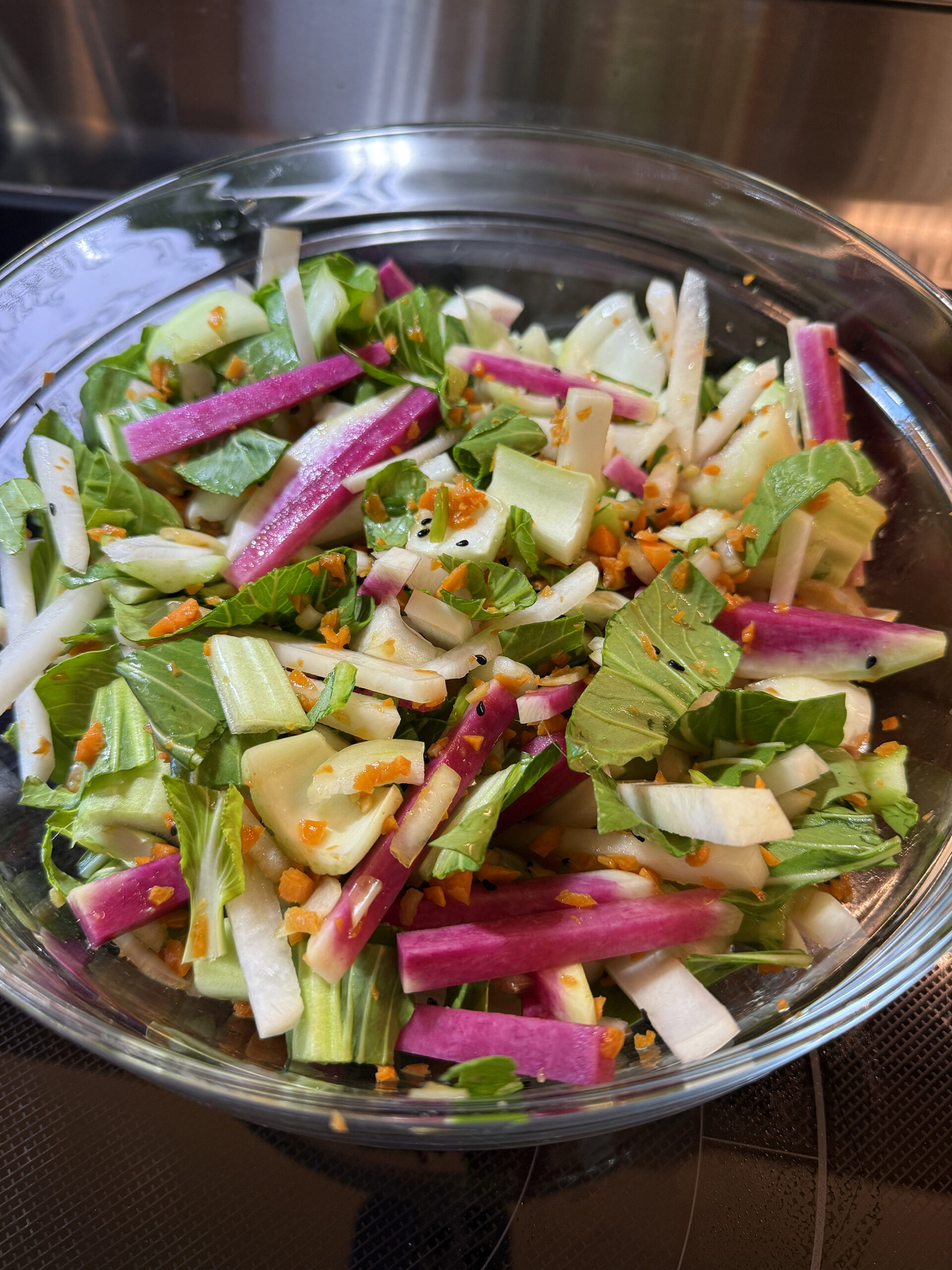
- Add the processed ingredients to the bok choy and and radishes and mix
- Add soy sauce, pepper flakes, hot sauce and black sesame seeds
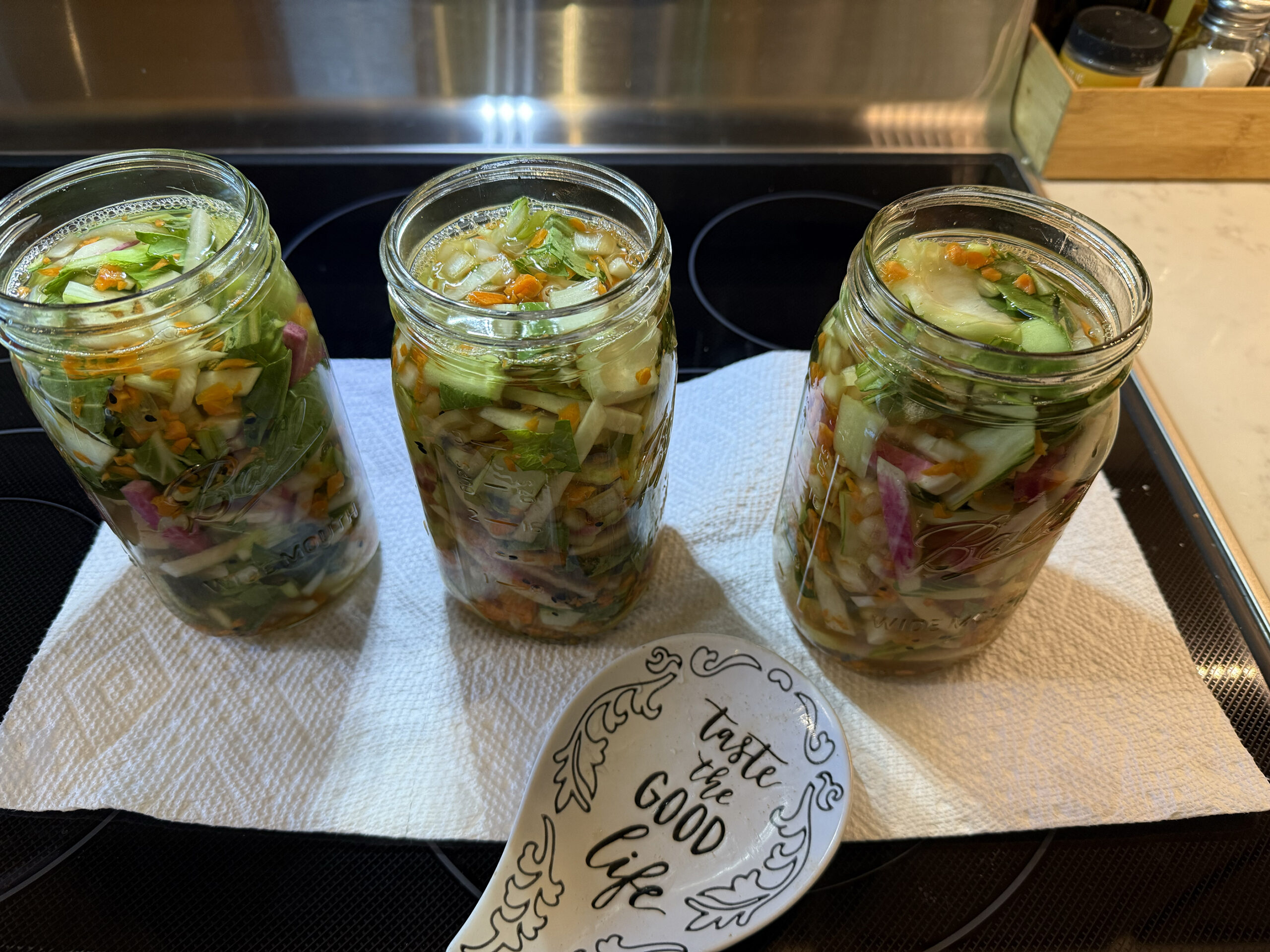
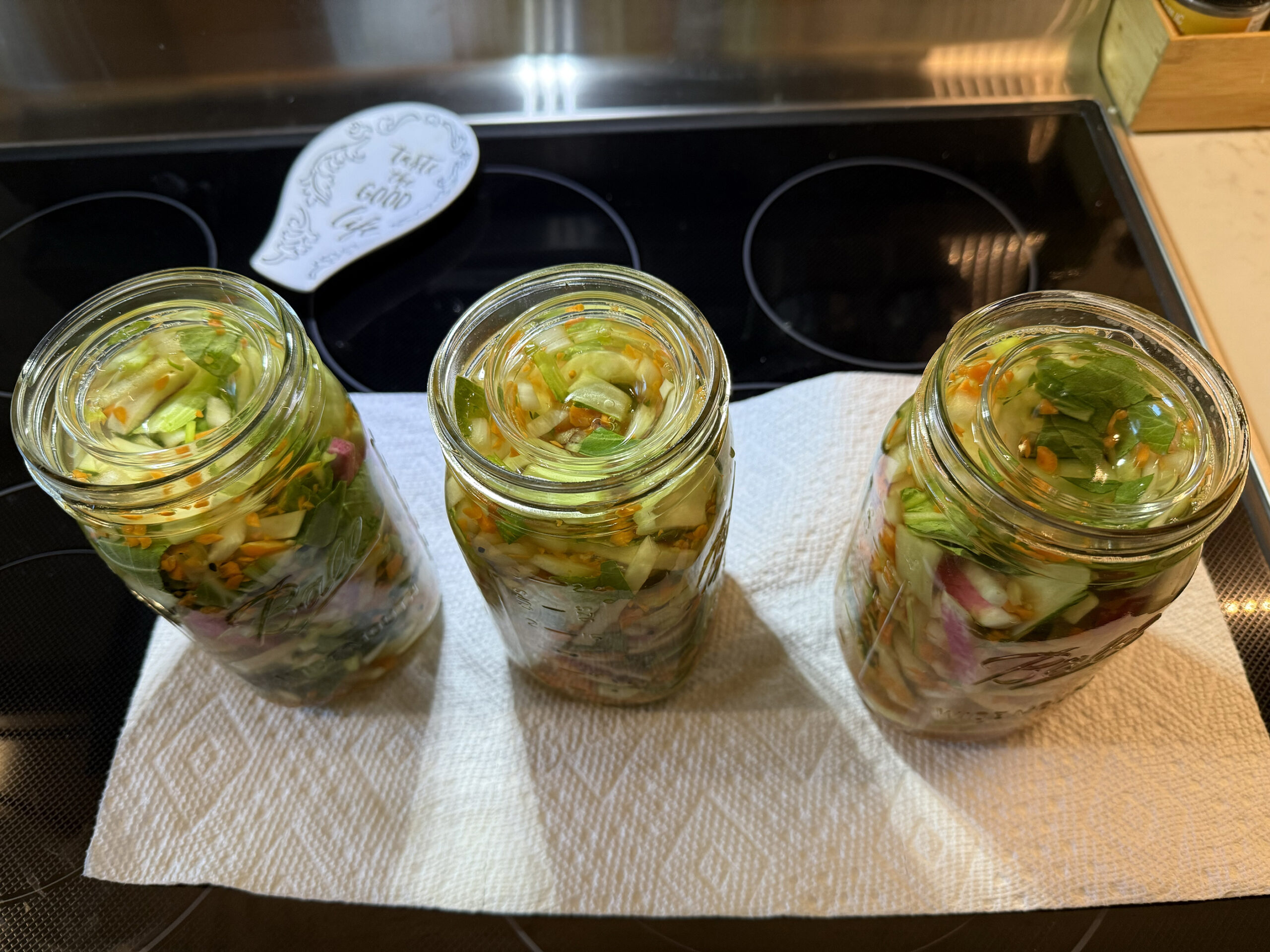
- Mix thoroughly and pack tightly into Ball quart jars
- Mix up the brine. It should be 2 tablespoons of kosher sea salt to 1 quart of purified water. Completely dissolve the salt into the water.
- Top each jar with the brine, pushing down to remove any air bubbles
- Add a weight to the top of each to keep everything submerged. A small glass dish works.
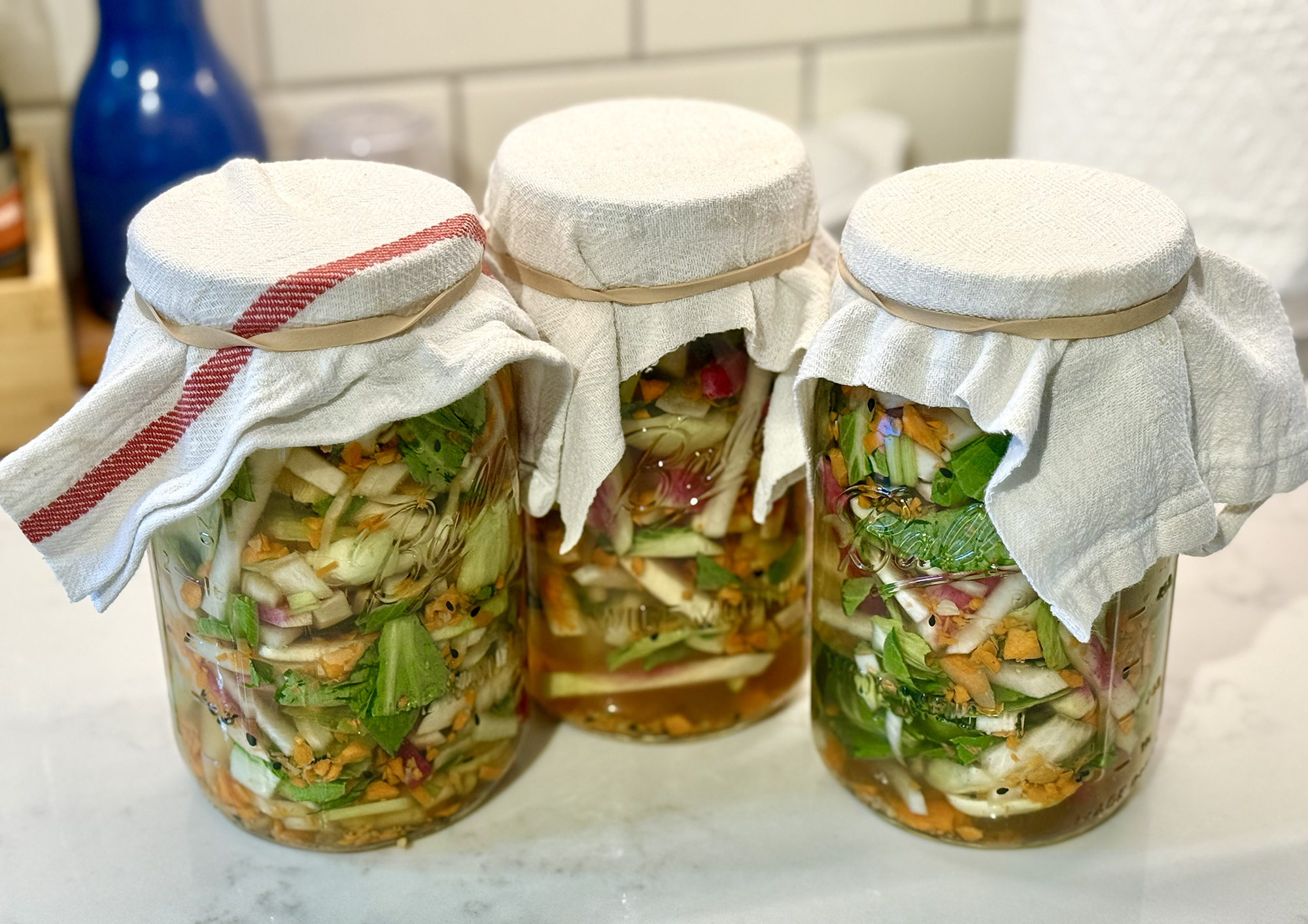
- Cover with a cloth and a rubber band to keep the cloth in place.
- Leave in a shaded warm spot in the house for 7 to 10 days, swirling or pushing down on the contents once a day to make sure it all stays submerged.
- After the 7 to 10 days, remove the cloth and secure with lids and refrigerate.